
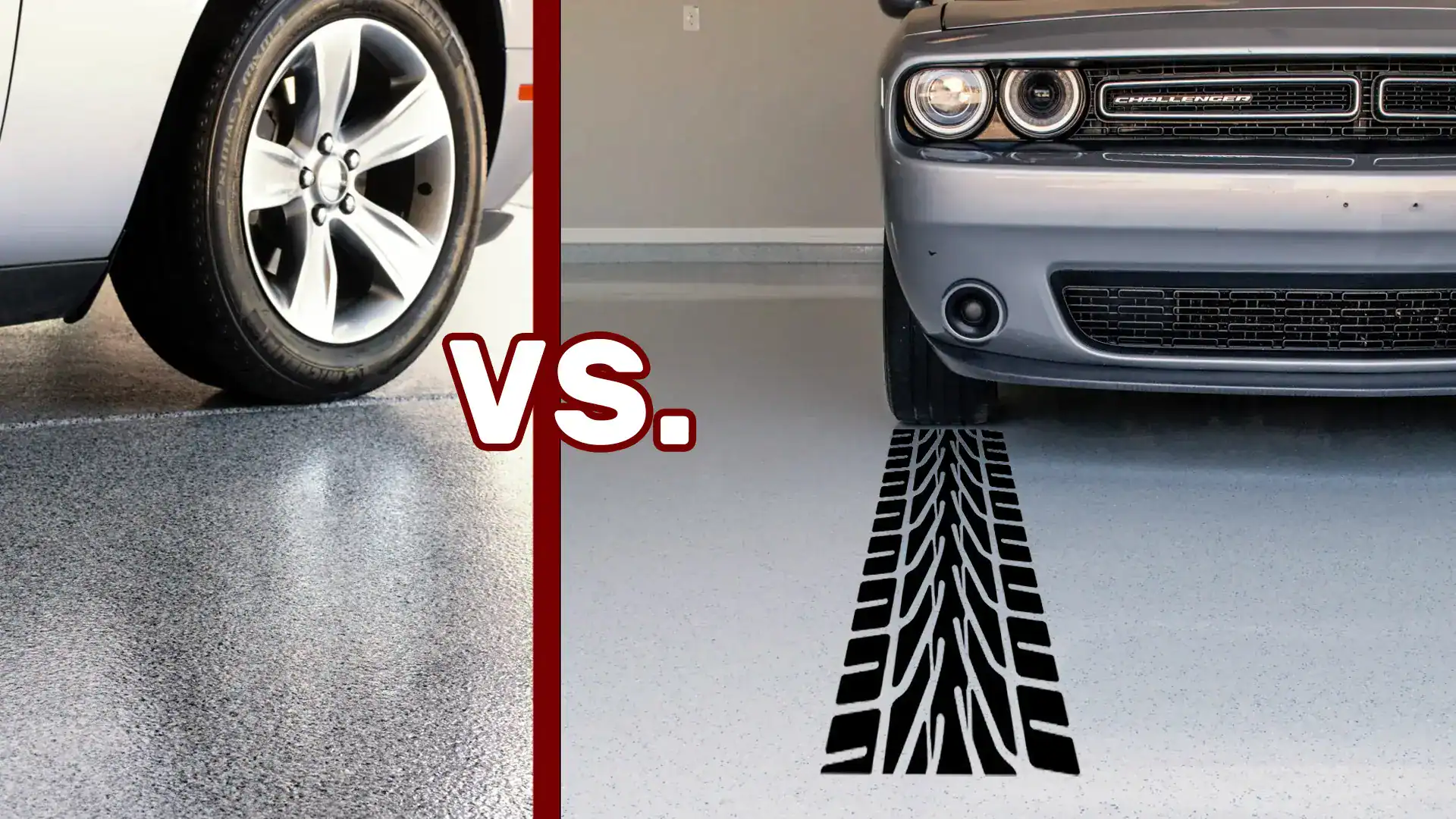
Your garage floor may look flawless today. Clean, glossy, and professionally finished. But every time you park your car, something is happening beneath the tires. Hot tire transfer is one of the most common causes of early coating failure. A properly installed polyaspartic floor coating is designed to resist it, but not all systems are built the same.
Heat, Pressure, and the Science Behind the Damage
Many 1-day garage floor coatings rely on thin, quick-cure polyurea or polyaspartic layers applied as both the direct-to-concrete primer coat and single, less-than-100%-solids clear top coat. We’ve written extensively on why using a polyurea-polyaspartic coating direct-to-concrete is a really bad idea (hint: they are very poor at mitigating moisture). But in this blog, we are focusing on the clear top coat and why this can sometimes be a problem in “1-day” coatings as well.
Here’s why.
Car tires contain plasticizers that keep the rubber flexible. As the tires heat up during driving, these softening agents migrate to the tire’s surface. When you park, the plasticizers can transfer into the garage floor coating below causing discoloration and surface tackiness. This is not uncommon if the clear polyaspartic top coat isn’t highly crosslinked and 100%-solids.
Why Some Polyaspartic Floor Coatings Fail Faster
Without a quality, 100%-solids, highly cross-linked polyaspartic as the clear top coat, hot-tire transfer is common. This is the reason many “1-day” installers don’t warrant against hot-tire transfer…some even go as far as suggesting the use of vehicle pads!
How a 2-Day Polyaspartic Floor Coating Prevents It
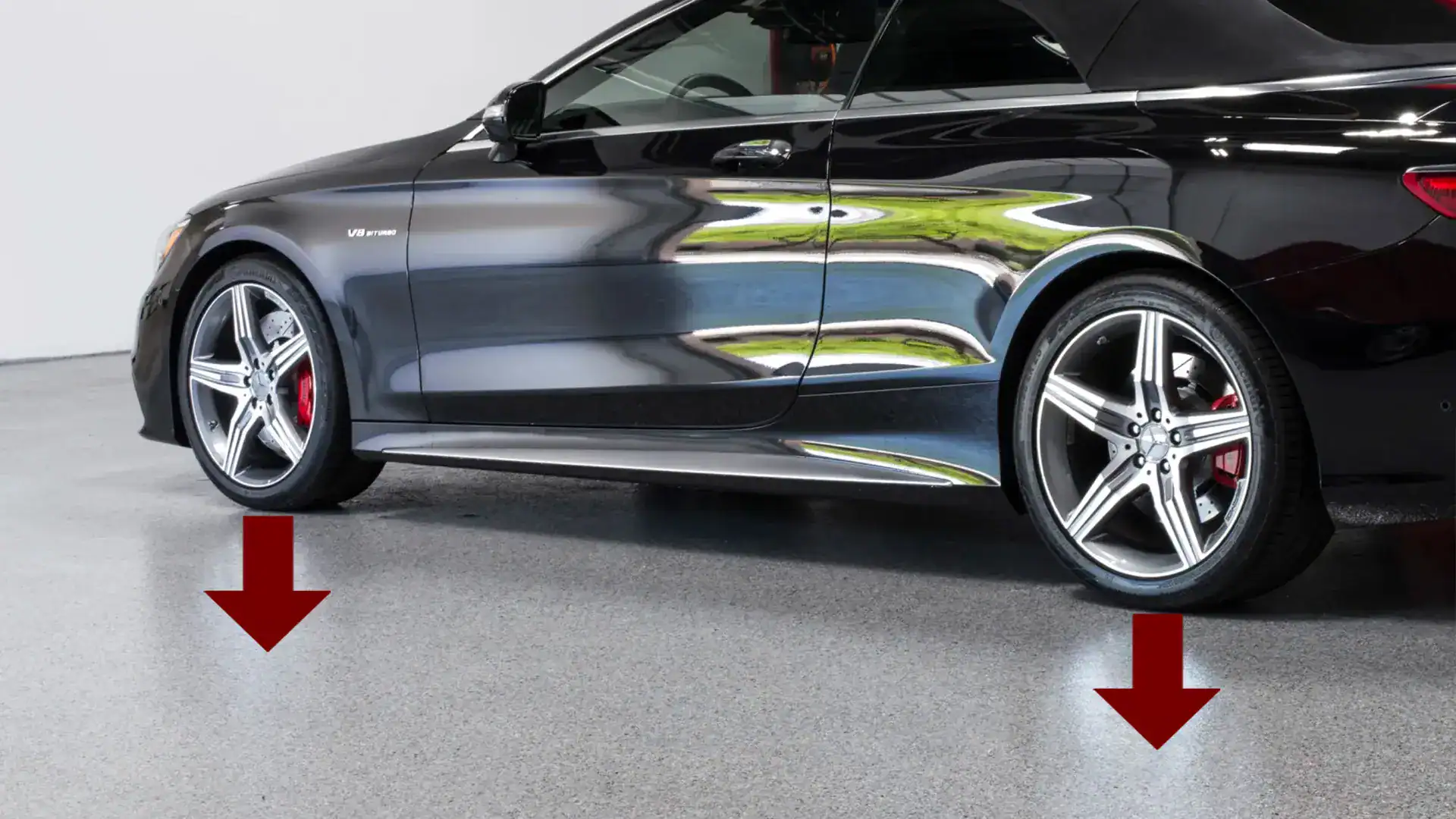
At Garage Floor Coating of New York, we install hybrid epoxy and polyaspartic coating systems that typically take 2 days to apply. These systems use quality 100%-solids products, layered in a way to mitigate for both moisture and staining (including hot-tire transfer), ensuring long-term performance.
Day one begins with mechanical grinding to open the concrete surface. Then, a high-build, moisture-mitigating, 100%-solids epoxy base coat is applied to act as the thick, moisture vapor barrier. A full flake broadcast is then embedded into this base layer for added contrast, depth and durability.
On Day two, we apply two separate 100%-solids polyaspartic clear top coats (not just one!). These dual, highly cross-linked, quality topcoats create a dense, UV-stable surface that resists heat, pressure, chemical exposure…and hot-tire transfer.
Built to Handle Daily Use Without Breaking Down
A high-quality polyaspartic floor coating prevents hot tire pickup, resists staining, and maintains its appearance over time.
In New York, where seasonal changes and daily use put floors to the test, that durability matters. If you want your garage floor to last, it needs to be built to resist what your tires leave behind.
Contact Garage Floor Coating of New York today to learn more about a polyaspartic floor coating system designed to stop hot tire transfer before it starts.